
Creating a Safe Space: 6 Tips to Improve Your Classroom
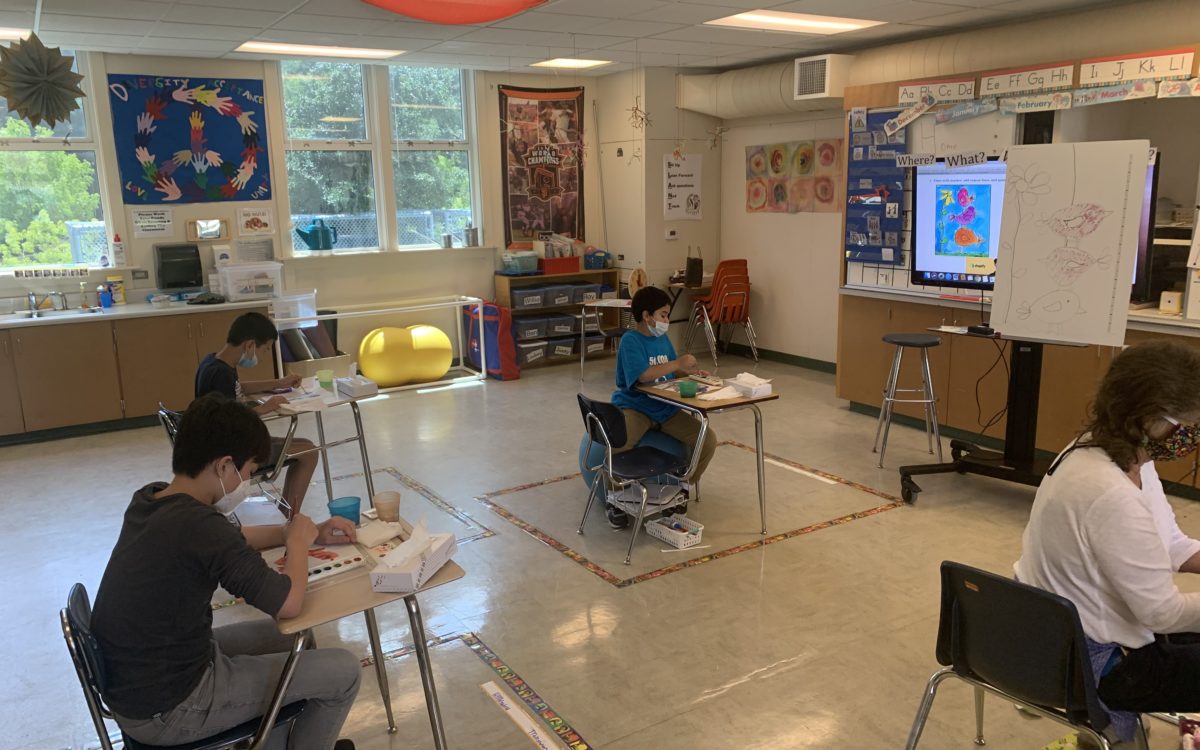
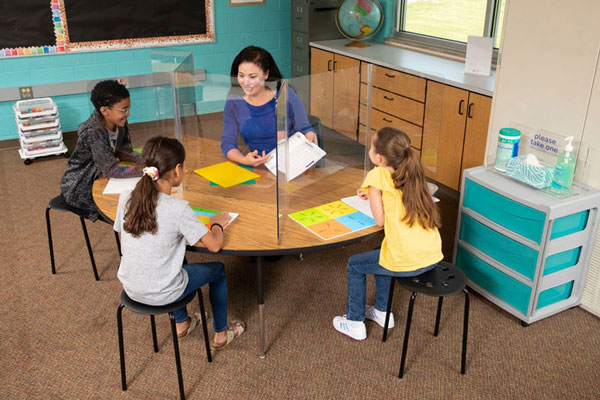 Currently, under CDC guidelines, schools need to maintain proper distancing in classrooms and learning environments. For example, when spacing students six feet apart means that the average classroom can only accommodate no more than 12 to 15 students at a time. In order to follow these recommendations, “K-12 leaders will need to rethink the design of school spaces and/or schedules to solve this challenge,” advises Cindy Eggebrecht-Weinschreider at spaces4learning.com.
In order to solve these challenges, schools need ideas on how to expand their current classroom spaces and the products to achieve the desired results. From organizing small classroom spaces to portable classrooms, teaching spaces need to facilitate the health and safety of students and educators.
 In this article, we offer six tips that will help create safe classroom spaces easily and effectively. We also offer several product lines, which we’ll discuss below, that will assist in creating these classroom improvements for safe learning.
1. Place Social Distancing Reminder Signs & Decals
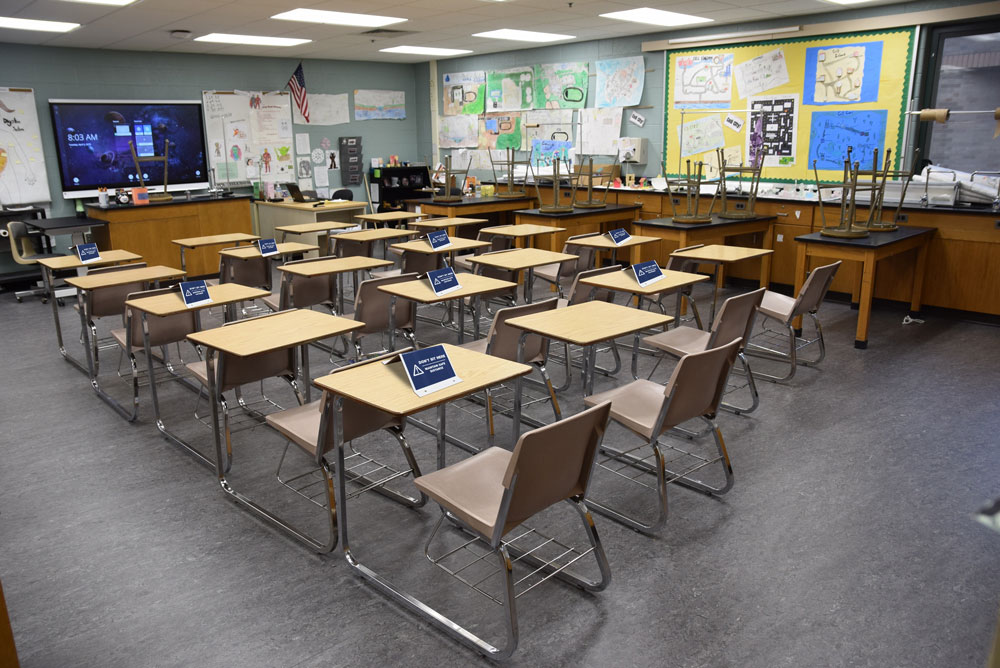
Double-sided seating signs are a simple, effective way to help keep students distanced and safe. Use on cafeteria tables, classroom tables or desks, or other common area seating situations. Consider using tabletop vinyl decals to easily social distance and organize student seating arrangements. The simple peel-and-stick designs are perfect for school workstations.
 Peel and stick vinyl decals clearly display your school message for social distancing guidelines as well as handwashing reminders. These decals adhere to all types of surfaces including windows, doors, walls, or smooth painted surfaces. Installation is simple and decals are also removable, allowing you to change out, move, or takedown messages as desired.
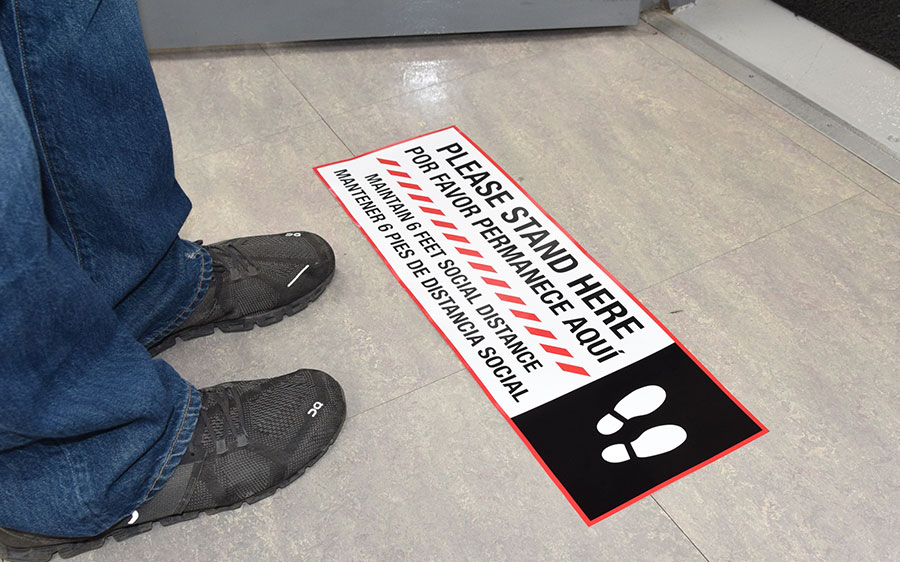
Help enforce social distancing guidelines with slip-resistant vinyl floor decals, or floor stickers. Decals are designed for indoor use on hard flooring surfaces or carpet or for use outdoors on asphalt or concrete. A simple peel and stick application, for easy installation, and are also easily removable.
2. Install Safety Shield Sneeze Guards
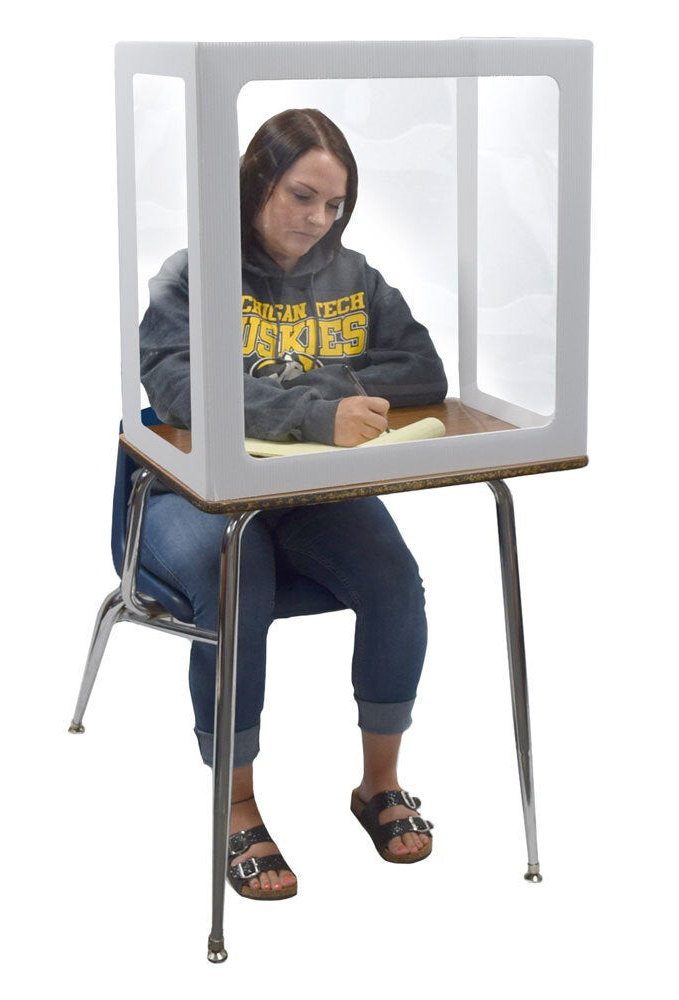 Create a safe and secure barrier in classrooms, cafeterias, or libraries with safety sneeze guards, also called safety dividers or shields. These are available in a variety of material options including a clear acrylic material with flexible corners, or a more affordable option is the corrugated plastic with clear rigid plastic film. Most sneeze guards can easily be secured to desks, tables, or workstations with double-sided tape or mounting brackets.
Consider clamp-on style divider sneeze guards on folding tables for classrooms or lunchrooms. The clear and flexible panels provide social distancing of students but still allows the table to be folded and rolled away.
Of course, some schools may not have the funding to purchase commercial sneeze guards for their entire school, which leaves maintenance staff, administrators, and teachers to get a little creative.
Just do a Google search for do-it-yourself sneeze guards in schools and you'll find lots of ideas. In this article at CafeMom.com, "Real Teachers Are Sharing How They're Making Their Classrooms Work This Year", the author Kaitlin Stanford shares with us what many teachers are doing across the country to help keep students safe in the classrooms.
3. Rethink Classroom Layouts
There are other things that schools can do right now to create safe space in their classrooms. Here are a few simple solutions that just require a little effort and creativity, and cost nothing.
- Reorganize classrooms to create more space between students.
 Remove any unnecessary supplies, storage containers or cabinets, or bookshelves to free up space.
- Set up the classroom with student movements in mind to create an organized, safe movement or flow.
 Remove any unnecessary supplies, storage containers or cabinets, or bookshelves to free up space.
Ensure the teacher's desk is sufficiently spaced from the students
4. Use Versatile Furniture to Easily Create Desired Layouts
Use existing, or purchase new, lightweight student desks for easy manipulation, or desks with unique shapes to easily facilitate any arrangement. Tables, desks, or workstations with casters can easily be moved and set up in various arrangements.
Consider these lightweight and portable options:
- Virco® Zuma Brand single-student desks feature adjustable height legs, available in unique shapes, are lightweight for easy arranging, and come with or without a book box.
- Multi-Purpose Mobile Workstations feature adjustable height legs and casters for easy maneuverability and fast classroom setups.
- Folding Tablet Arm Workstation Chairs add flexibility to any learning environment and are easy to transport. These student workstations feature an extended tablet arm that provides extra writing space with a new, curved design to allow for easier access.
- Fold & Roll Away Tables easily fold and roll anywhere you need them.
5. Create Portable Classrooms
 In Dan Hounsell’s article on FacilitiesNet.com, “Schools Struggle to Expand Classroom Space”, he shares what he learned from Joseph Allen, an associate professor of Exposure Science at Harvard University who runs the university’s Healthy Building Program. Allen says school systems could take cues from the health care system, which has found ways to increase capacity when coronavirus cases surge. Consider creating makeshift classrooms in outdoor shelters or buildings, trailers, or empty building spaces throughout the community.
For schools with extremely small classrooms or large numbers of students per class, consider utilizing non-traditional spaces throughout the school and turn them into classrooms - libraries, media centers, auditoriums, cafeterias, etc. This may require the use of mobile desks and tables that are easy to set up and tear down so these areas can efficiently shift to classroom use.
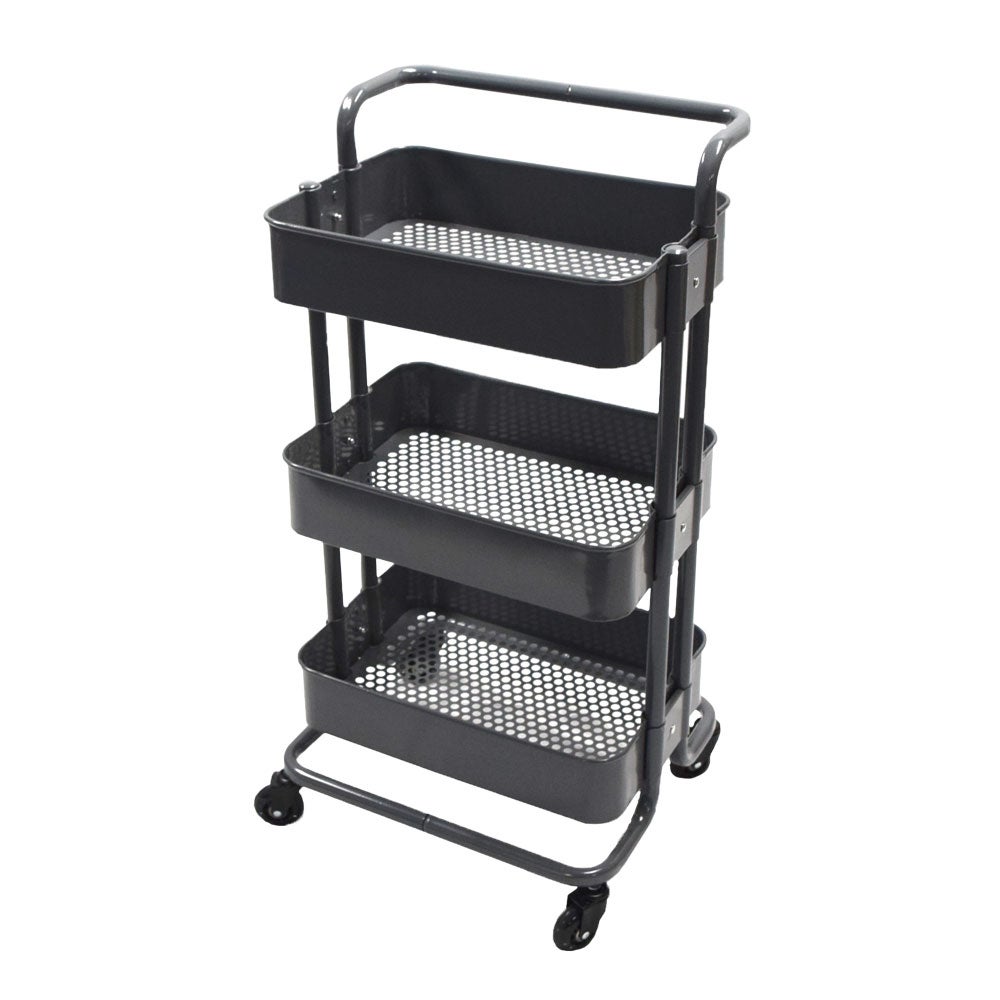
Teachers will also need something portable, that has multiple sections for classroom papers and materials, and that can move from class to class. The Compact 3-Tier Multi-Purpose Storage Cart with Handle is a great solution. This cart is perfect for moving from classroom to classroom as well as organizing paperwork. You can split it off by one shelf per class or subject!
6. Weather Permitting, Use Outdoor Spaces
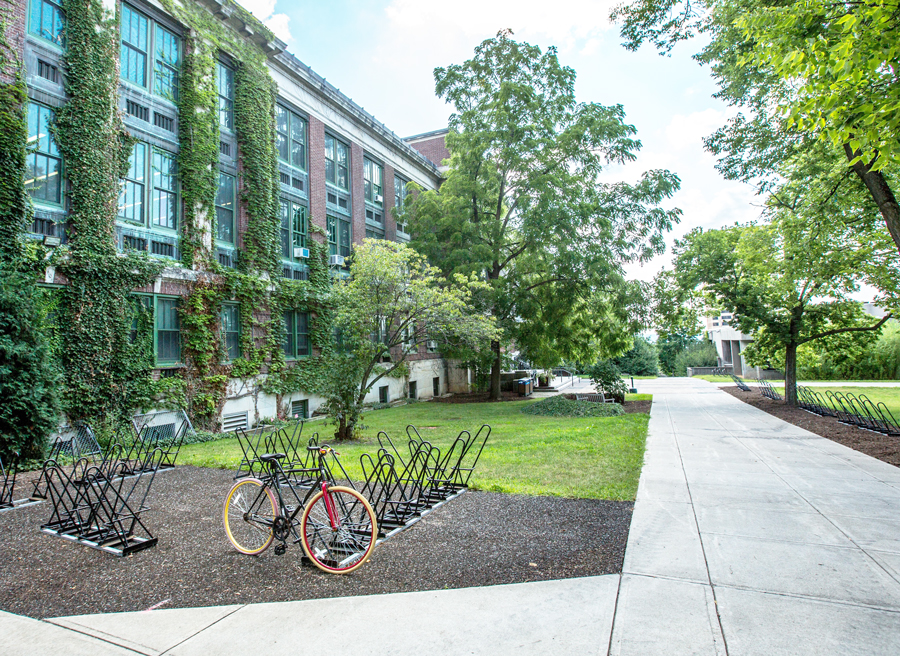 This may not be an option for all schools right now, but if the weather is cooperating schools should consider utilizing outdoor spaces on school grounds. This allows for ultimate ventilation and it's much easier to keep students separated. Schools could even consider only having school during warm weather seasons and taking winters off instead - but it might be tough to get everyone on board with that!
It’s possible for schools to find the space they need to maintain distance and keep students safe and healthy, but it’s going to take some creative thinking and possibly some investment. If you have the budget and are still struggling with creating safe spaces, consider the tips listed above. If you don’t have the budget, you can still use the tips above with a little creativity and effort.
We hope you found this guide helpful. To learn more about solutions to common school maintenance concerns please visit the School Fix® Blog, or explore our collections of products we have everything from locker parts to parking lot barricades or bathroom partition hardware.
References:
- Eggebrecht-Weinschreider, Cindy. “Rethinking School Spaces and Structures to Maintain Proper Distancing Amid COVID-19”. spaces4learning.com. https://spaces4learning.com/articles/2020/05/08/rethinking-school-spaces-and-structures-to-maintain-proper-distancing.aspx 2020, May 8.
- Hounsell, Dan. “Schools Struggle to Expand Classroom Space”. CMMonline.com. https://www.facilitiesnet.com/emergencypreparedness/tip/Schools-Struggle-To-Expand-Classroom-Space--47349 2020, Nov. 20.
- Stanford, Kaitlin. "Real Teachers Are Sharing How They're Making Their Classrooms Work This Year". cafemom.com. https://cafemom.com/news/226750-teachers-classrooms-school-desk-safety-challenges. 2020, August 24.
